

5 MIN READ
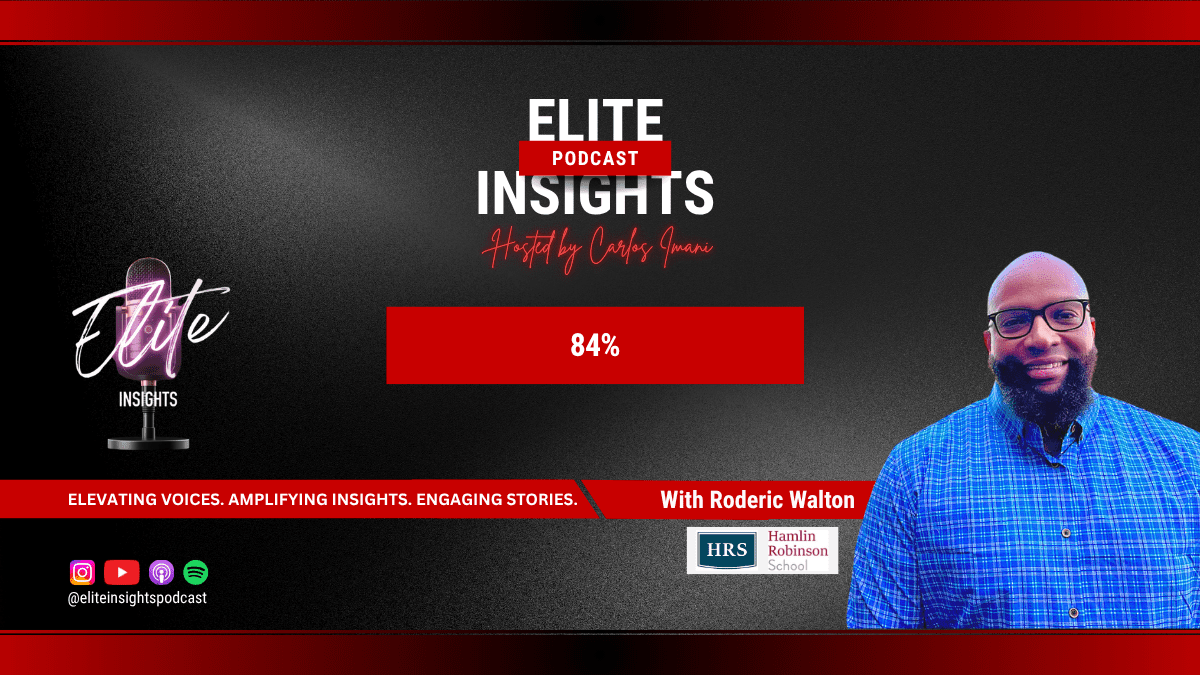
Rod Walton said something in our conversation that I haven’t been able to put down.
He was talking about the history of literacy in this country — from slavery, where learning to read was forbidden because knowledge was a form of freedom. To Reconstruction, where literacy was weaponized as a barrier to voting rights. To today, where 84% of Black students in this country are not proficient in reading or math.
Then he said: Frederick Douglass told us — once you learn to read, you’ll be free forever.
I sat with that for a long time after we stopped recording.
The Statistic That Should Make You Stop
Rod is the Director of Outreach and the Learning Center at Hamlin Robinson School in South Seattle — and the first Black executive in the school’s 41-year history. He came to this work through years of community building, legal support, prison reform advocacy, and youth mentorship. He arrived in Seattle three years ago and immediately started building bridges between the school and the broader community.
When he started sharing numbers, I had to ask him to slow down.
41% of the nation’s fourth graders are reading below basic. A third of eighth graders. When you drill down to Black and brown communities, those numbers rise to 55, 57, 52%. And then the one that stopped the room: 84% of Black students in this country are not proficient in reading or math.
Rod said what I was thinking: we should all be screaming.
It’s Not a Willpower Problem
Here’s what I didn’t fully understand before this conversation: a significant portion of those struggling students may not have a motivation problem, a behavioral problem, or a capability problem. They may have an unidentified learning difference — most commonly dyslexia — that no one caught early enough to address.
One in five people on earth has some form of dyslexia. It’s hereditary. It often runs in families where parents are also struggling readers, which means the home support system that’s supposed to catch these things is navigating the same challenge.
Rod used an analogy I won’t forget: it’s like needing glasses. If your child squints at the board and can’t read the words, you don’t tell them to try harder. You get them glasses. With dyslexia, the solution exists. But it requires identification, early intervention, and a system willing to do both.
Washington State passed legislation in 2018 requiring universal screening for dyslexia in K through 2 students. The infrastructure to implement it consistently across districts is still catching up. That’s the gap organizations like Hamlin Robinson’s Learning Center exist to fill — providing free screenings in English and Spanish, teacher training, family advocacy, and the kind of direct support that school districts often can’t offer alone.
With early intervention, Rod said they’re seeing 90-plus percent turnaround in academic outcomes.
90%.
The Narrative Has Been Hijacked. That’s Our Work.
Rod said something that connected everything EC does to something much larger than event production or communications strategy.
He said our story — the story of Black and brown people in this country — has been hijacked. Rewritten. Weaponized against us. And the most insidious version of that hijack is the lie that young people begin to believe about themselves: that they aren’t smart, that learning isn’t for them, that the system that was designed to fail them is somehow a reflection of their worth.
That’s not a literacy problem. That’s a narrative crisis.
And narrative is exactly where EC works.
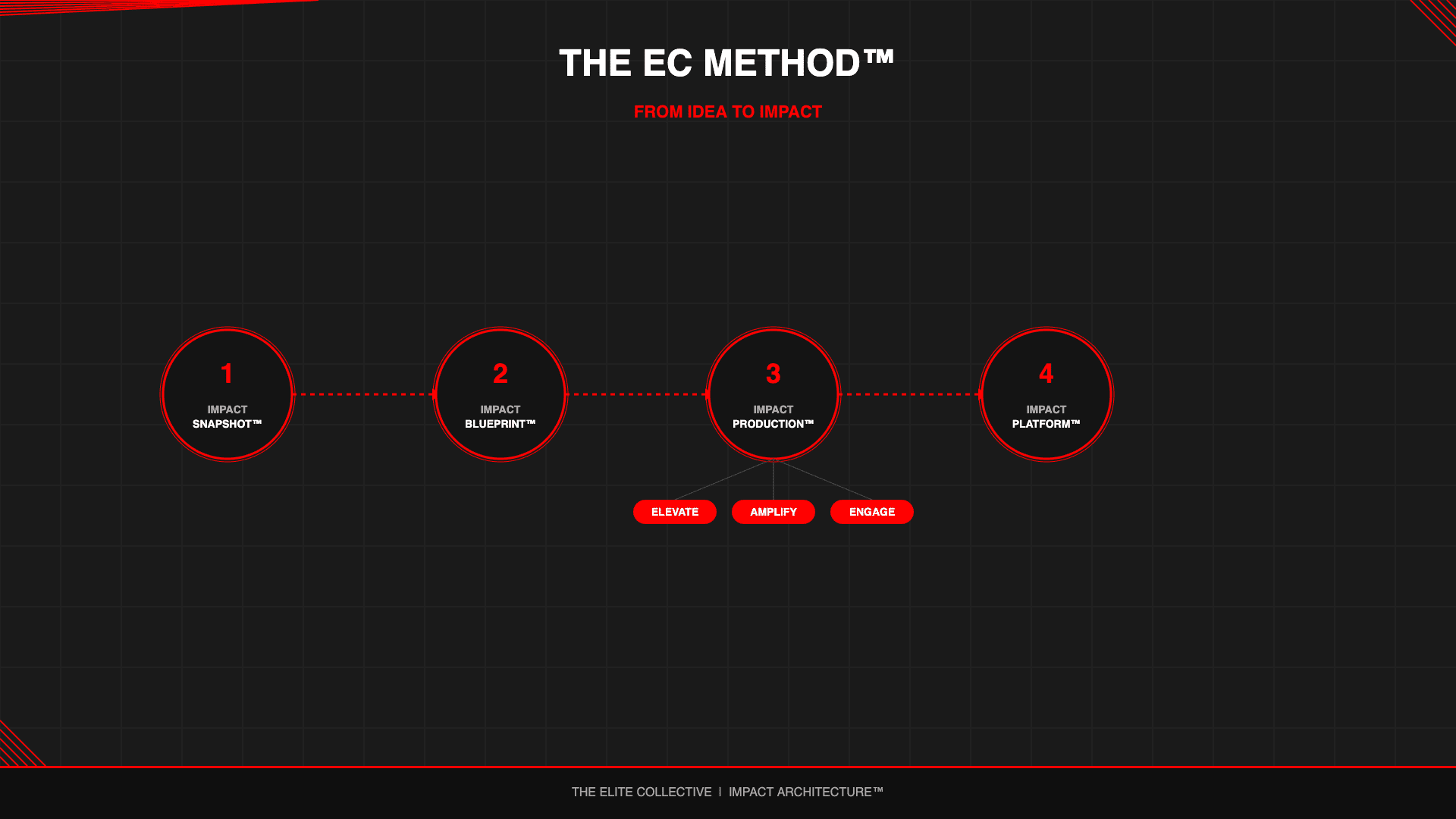
When I talk about Impact Architecture™ — about helping mission-driven organizations tell their own stories with clarity and intention — this is what I mean in its deepest form. Hamlin Robinson isn’t just teaching kids to read. They’re teaching kids to know who they are before the world tells them differently. Rod’s movement, as he put it, is about affirmation.
Your story doesn’t change. Everything else fits into that story. Not the other way around.
What Elite Actually Means
I always end my Elite Insights episodes with a quick-fire question: what does elite mean in your world?
Rod’s answer is going to stay with me for a long time.
Elite means accountability. It means continuing to push forward to something greater than yourself. That journey never stops with you. You’re just handing it off to someone else. That’s the gold standard of what we’re all trying to achieve.
That’s the whole thing. That’s why EC exists. Not to be the best in the room. But to build something worth handing off. To document the work being done right now so the next generation knows it happened, knows it was real, and knows it’s worth continuing.
The Invitation
If you have a child, a niece, a nephew, a student in your life who is struggling to read — and especially if they’re a Black or brown child in this country — please go to learningcenterhamlinrobinson.org. Free screenings. Free resources. English and Spanish.
And if you’re leading a mission-driven organization that’s doing work this important but struggling to communicate it, document it, or get it in front of the people who need to act on it — the Impact Snapshot™ is fifteen minutes that could change the direction of your strategy.
The work Rod is doing deserves to be seen. So does yours.
Carlos Imani is the Executive Producer and Principal of The Elite Collective, Seattle’s leading Impact Architecture™ firm. He hosts Elite Insights, a podcast about community, craft, and the architecture of meaningful work.