

5 MIN READ
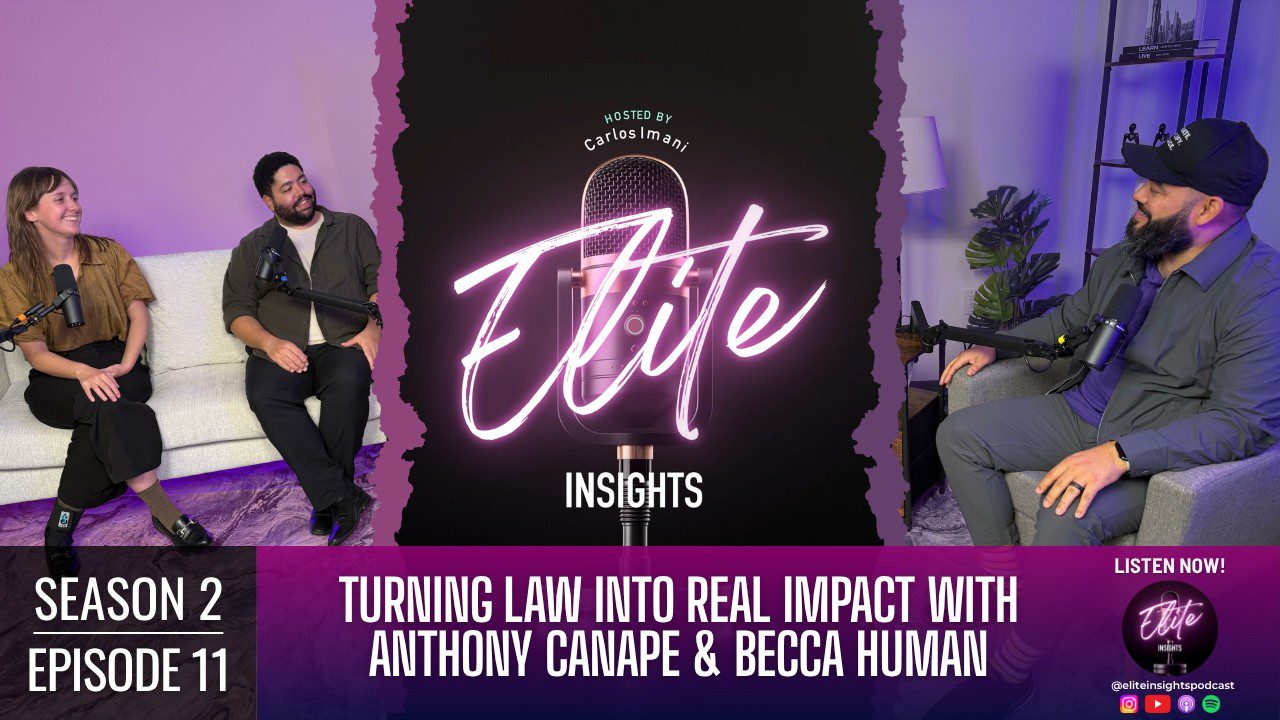
There’s a difference between having rights and being able to use them. It’s the kind of gap that looks invisible on paper but shows up in emergency rooms, courtrooms, and government offices where people are told the law protects them — and then experience something very different. Anthony Canape and Becca Human of the QLaw Foundation have dedicated their careers to closing that gap, and our conversation for Elite Insights made the case that legal advocacy isn’t just a profession. It’s architecture.
As Board President and Attorney respectively, Anthony and Becca lead an organization that provides direct legal support to LGBTQ+ communities navigating systems that weren’t designed with them in mind. Their work is proof that impact doesn’t always look like a campaign or an event. Sometimes it looks like a legal brief that changes someone’s life.
The Access Gap Is the Real Crisis
Anthony and Becca framed the challenge with a clarity that should make every nonprofit leader pay attention: the existence of legal rights means nothing without the infrastructure to access them. For LGBTQ+ individuals — particularly those at the intersections of race, immigration status, and economic vulnerability — the distance between legal protection and lived experience can be vast.
The QLaw Foundation exists to bridge that distance. Not through awareness campaigns or symbolic gestures, but through direct legal representation that meets people where they are: in housing disputes, family law cases, name and gender marker changes, and the countless bureaucratic encounters where dignity is on the line.
EC recognizes this pattern in every sector we work in. The organizations doing the most important work are often the ones solving problems most people don’t even know exist. The access gap isn’t headline news. But for the people trapped inside it, it’s everything.
Community-Centered Advocacy Changes Outcomes
Becca talked about advocacy not as something done for a community but as something built with one. The QLaw Foundation’s model centers the experiences and needs of LGBTQ+ individuals in every strategic decision — from which cases to take to how legal clinics are structured. That’s not a diversity checkbox. That’s a design philosophy.
When advocacy is community-centered, the outcomes are different. The legal strategies are more responsive. The trust is deeper. The solutions address root causes rather than symptoms. And the people being served aren’t passive recipients — they’re collaborators in building the systems that protect them.
At EC, we build every communications and production strategy on the same principle. The communities we serve aren’t audiences. They’re architects. And the organizations that treat them as such produce work that lasts longer and lands harder than anything designed from the outside looking in.
Small Legal Actions, Life-Changing Outcomes
One of the most powerful things Anthony shared was how seemingly small legal actions — a name change, a corrected document, a resolved housing dispute — can transform a person’s entire trajectory. These aren’t headline cases. They don’t make the news. But for the individual involved, a single legal intervention can mean the difference between safety and vulnerability, between being seen and being erased.
That’s the kind of impact that’s hard to quantify but impossible to overstate. The QLaw Foundation measures success not in precedent-setting victories but in the cumulative effect of hundreds of individual lives made more stable, more dignified, and more protected.
EC understands this scale of impact. The most powerful stories aren’t always the biggest. Sometimes the most compelling proof of an organization’s value is the individual whose life changed because someone showed up with the right expertise at the right moment. Impact Architecture™ isn’t always grand. Sometimes it’s precise.
Leadership That Shows Up in Practice
Anthony and Becca represent a model of leadership that EC deeply respects: leadership that shows up in practice, not just in position. Board leadership at QLaw isn’t ceremonial. It’s operational. Anthony and Becca are in the work — making strategic decisions, building partnerships, and ensuring the organization has the resources and relationships it needs to keep delivering direct impact.
That kind of leadership is rare and it matters. Organizations built on performative governance eventually stall. Organizations built on leaders who are in the work — who understand the mission because they live it — build the kind of institutional resilience that survives funding cycles, political shifts, and the inevitable challenges of serving vulnerable communities.
What EC Takes From the QLaw Foundation Model
Anthony Canape and Becca Human are proof that legal advocacy is impact work — and that the organizations closing the access gap deserve the same strategic investment as any nonprofit producing events or running campaigns. The QLaw Foundation’s model of community-centered, direct-service legal advocacy is Impact Architecture™ in its most essential form: building systems that protect people.
At EC, we take this lesson into every engagement. The organizations that change lives often do it quietly. Our job is to make that work visible, fundable, and sustainable.
The Invitation
If your organization is doing the work of legal advocacy, direct service, or systemic change — the kind of work that transforms lives without ever trending — the world needs to understand what you’re building.
The Impact Snapshot™ is fifteen minutes. It shows you where your story is resonating and where it needs amplification. No pitch. Just clarity.
Rights without access aren’t rights. Let’s build the architecture that closes the gap.
Carlos Imani is the Executive Producer and Principal of The Elite Collective, Seattle’s leading Impact Architecture™ firm. He hosts Elite Insights, a podcast about community, craft, and the architecture of meaningful work.