

4 MIN READ
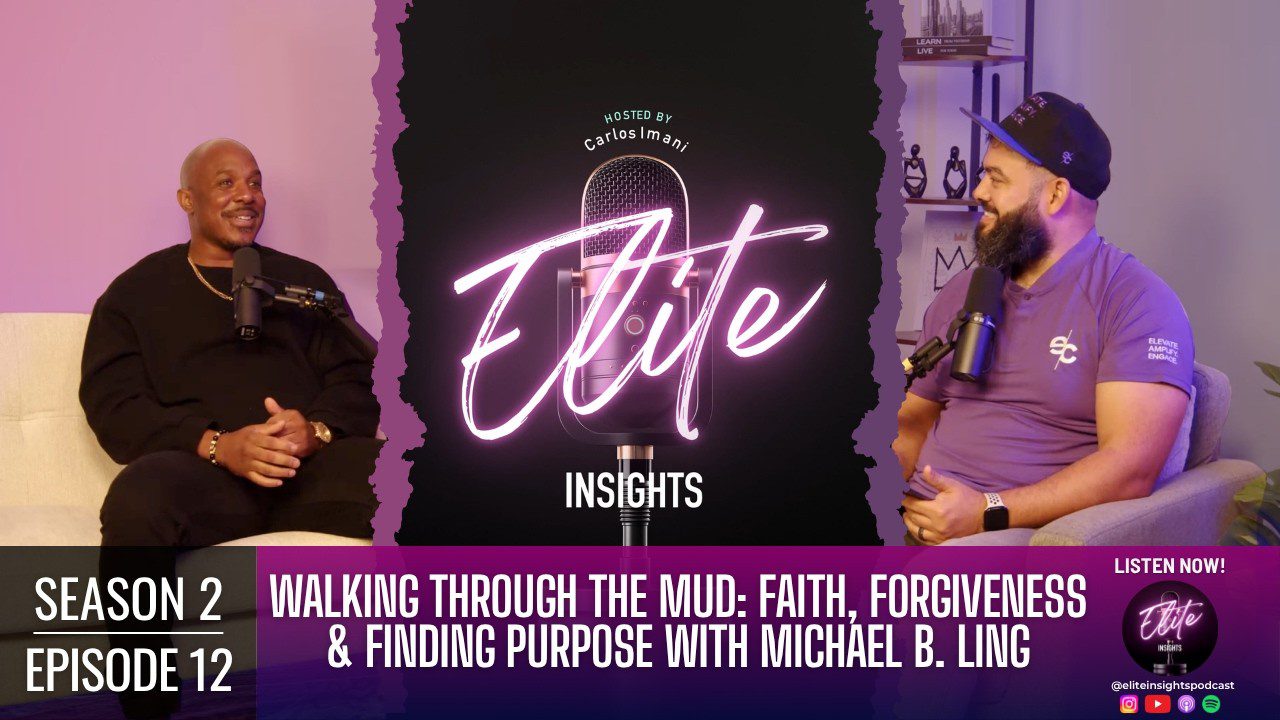
He said it like he’d been sitting on it for years. “Sometimes you can have mud on you and you’ll just throw on a suit and cover it — and people won’t know what you’ve been through. They’ll just see the exterior.” That image landed somewhere quiet. Because I know that suit. A lot of us in this work do. Sitting across from Michael B. Ling, I realized the most important thing we can build isn’t always a stage or a strategy. Sometimes it’s the courage to take the suit off.
The Leadership Nobody Talks About
There’s a version of leadership we celebrate publicly — polished, purposeful, put together. And there’s another version that happens before anyone’s watching. The one where you’re sorting through what you’ve carried, what you’ve been handed, and what you’ve been hiding.
Michael didn’t frame forgiveness as a spiritual practice. He framed it as a structural one. Unforgiveness, he said, is like drinking poison and expecting someone else to die. It keeps you in a prison — an unending cycle of turmoil that quietly shapes every decision you make, every room you walk into, every relationship you try to build.
That’s not just personal philosophy. That’s Impact Architecture™.
The leaders doing the deepest mission-driven work aren’t just well-resourced or well-positioned. They’ve done the interior work that makes the exterior sustainable. They’ve learned you can’t build something lasting from unresolved weight. The mud under the suit surfaces — in your leadership, your culture, how you show up for the people you’re trying to serve.
Clarity isn’t just strategic. It’s emotional. Forgiveness, Michael showed me, is one of the most radical acts of clarity a leader can choose.
The Proof Point: A Pool in the Florida Keys
Michael didn’t arrive at this insight from a mountaintop. He arrived from a pool in the Florida Keys.
He was on a family vacation — wife, daughter, a warm afternoon. They walked into a community pool and found themselves surrounded by a silence that made their presence known. Eyes everywhere. Michael felt it immediately. His whole body went to a familiar place — braced, defensive, ready.
And then his daughter looked up at him.
That moment cracked something open. He couldn’t stay in the posture he’d always known when the person beside him needed something different. He chose to lower the wall. The trip shifted.
He wrote about moments like that in his book, Journey — his raw, honest account of the people and experiences he had to forgive to move forward. He wrote 16,000 words in a week in a pastor’s living room in Michigan, worship music in his headphones, something finally ready to pour out. That’s not a writing sprint. That’s a release — the kind that only comes when you’ve done enough interior work to let the truth move.
The Weight That Doesn’t Show Up in Grant Reports
There’s something specific about being a Black man in America and carrying both the weight of what’s been done to you and the expectation that you’ll show up fully — graciously, every time.
Michael spoke about it with a tenderness I respected. He didn’t blame his parents. He acknowledged they did the best they could with what they had. In that acknowledgment was emotional intelligence that doesn’t come easy — especially in communities where survival required burying the hurt rather than naming it.
That’s the hidden labor of a lot of mission-driven leaders. They’re carrying the weight of their communities, their histories, their families — and building for others while doing it. The community engagement strategy they’ve built over years sometimes rests on a foundation of personal reckoning that never appears in annual reports or galas.
Michael does this work publicly through theater — at Acts on Stage, where what gets built in rehearsal rooms is as meaningful as what happens on stage. He called it family. Not metaphorically — structurally. People who show up, build something together, and don’t just go home when it’s over. That’s the architecture underneath the performance.
What EC Builds From This
At The Elite Collective, we talk often about what makes impact storytelling for nonprofits and mission-driven organizations actually land. The honest answer: it only lands when the story is true. Not polished, not positioned — real.
Michael is someone who’s learned that the most compelling thing he can offer isn’t the résumé. It’s the journey. When you’ve done the interior work — named what needed naming, forgiven what needed forgiving — your communication stops being a campaign and starts being a testimony.
That’s what we build: not just messaging or events, but a truthful, durable system for how a mission-driven organization’s story moves through the world. Impact Architecture™, at its core.
Strategy is where we begin. Impact is where we don’t stop.
If you’re leading an organization doing meaningful work but struggling to communicate it with the weight it deserves — the Impact Snapshot™ was built for that moment. It’s not an audit. It’s a conversation designed to help you see your story the way others need to see it. Start there.
Carlos Imani is the Executive Producer and Principal of The Elite Collective, Seattle’s leading Impact Architecture™ firm. He hosts Elite Insights, a podcast about community, craft, and the architecture of meaningful work.