

4 MIN READ
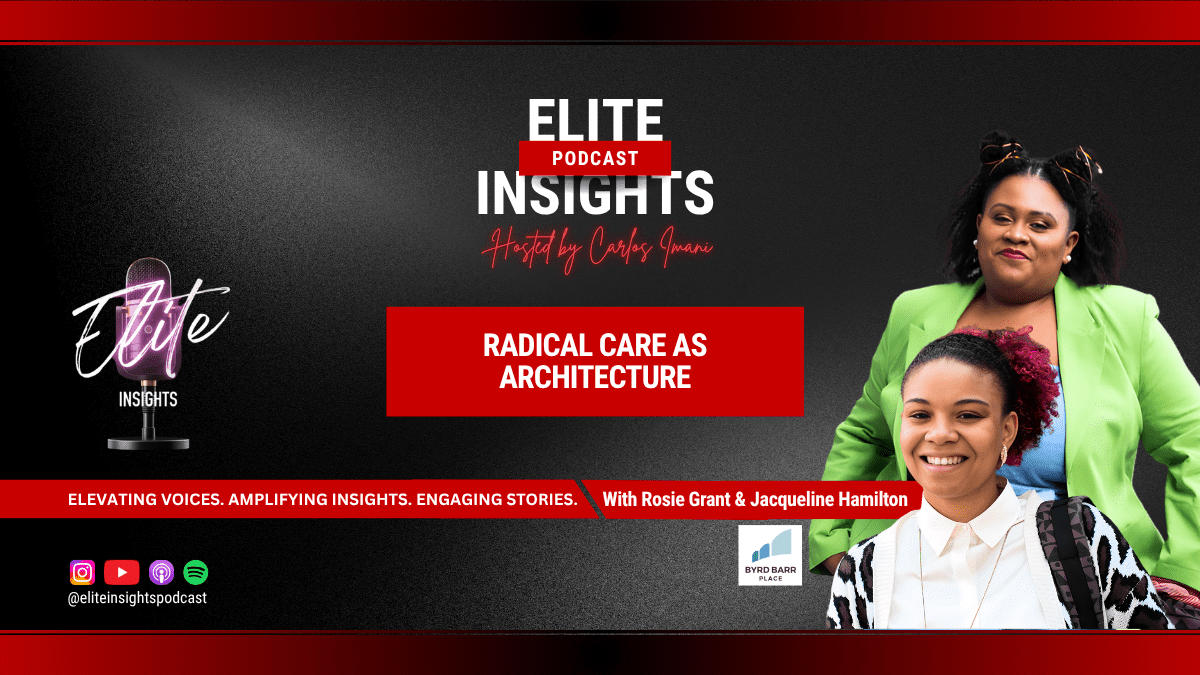
Rosie Grant said something early in our conversation that I keep coming back to.
She was describing the first time she walked into Byrd Barr Place — one of Seattle’s oldest Black-led community organizations — and she said the thing that hit her wasn’t the programs or the facilities. It was the feeling. The way people were treated when they walked through that door. Like they mattered. Like their presence was expected and honored.
That’s not a program design. That’s an architecture of care. And it’s the thing most organizations talk about but very few actually build.
When the System Wasn’t Built for You, You Build Your Own
Byrd Barr Place didn’t start as Byrd Barr Place. It started as CAMP — the Central Area Motivation Program — born out of the civil rights movement, built by Black Seattleites who looked at the systems around them and said: these weren’t designed for us. So we’ll design our own.
That history matters because it explains everything about how Rosie and Jacqueline approach the work today. When Jacqueline Hamilton talked about navigating systems of power while staying rooted in community, she wasn’t speaking theoretically. She was describing a daily practice — the discipline of serving people within structures that weren’t built to serve them, while simultaneously building something better.
That’s a tension most mission-driven organizations live inside. You operate within systems you didn’t design, serving people those systems often overlook, and you’re expected to produce outcomes that the system itself makes difficult. The organizations that survive that tension — and Byrd Barr Place has survived it for decades — are the ones that root their work in something deeper than compliance. They root it in care.
Dignity Is Not a Line Item
Here’s what I saw firsthand working with Byrd Barr Place that this conversation confirmed: dignity is not something you add to a program. It’s either in the foundation or it’s not.
When we produced the gala for Byrd Barr Place, we didn’t just set up cameras and a stage. We created what we now call the red carpet experience — a human photographer greeting every guest, capturing them at their best, making them feel seen before they even sat down. Not a photo booth with a machine. A person, looking at you, saying: you deserve to be documented at your most beautiful.
Rosie talked about this — about how setting that stage, creating that moment, tells every person in the room that their presence was worth preparing for. That a dollar well spent got them there, and the organization honored that by making the experience match the sacrifice.
That’s not event production. That’s Impact Architecture™ in its most literal form — designing experiences that communicate worth.
The Quiet Power of Showing Up
One of the things that struck me most about this conversation was how both Rosie and Jacqueline talked about the everyday work. Not the galas. Not the big moments. The Tuesday morning when someone walks in needing help with their energy bill. The Thursday afternoon when a family needs food and doesn’t want to feel ashamed about it.
Byrd Barr Place has been doing this work — housing, energy assistance, food programs, community health — for decades. And what makes it different isn’t the services. It’s the posture. It’s the way the people who work there treat every interaction as an opportunity to affirm someone’s humanity.
That’s the thing about community organizations that last. They don’t survive on grants alone. They survive because the people they serve keep coming back — and keep telling other people to come. That word-of-mouth isn’t marketing. It’s testimony. And testimony is the strongest form of storytelling there is.
What EC Learns From Organizations Like This
Every time we work with an organization like Byrd Barr Place, EC gets better. Not because we teach them anything — but because they teach us what it looks like when mission isn’t a statement on a wall. It’s a practice in a room.
The way Byrd Barr Place treats its community members is the standard EC tries to bring to every engagement. When we show up to produce an event, document a program, or build a communications strategy, we’re asking: does this honor the people it’s for? Does it make them feel seen? Does it communicate their worth back to them?
If the answer isn’t yes, the architecture isn’t right yet.
The Invitation
Byrd Barr Place has been building care into Seattle’s Central District for decades. If you’re in the community and need support — or if you want to support the work — find them at byrdbarr.org.
And if your organization is doing meaningful work but struggling to communicate it with the dignity and clarity it deserves — the Impact Snapshot™ is fifteen minutes. It shows you exactly where your storytelling strategy is holding and where it’s leaking.
Radical care isn’t just a philosophy. It’s an architecture. Let’s build yours.
Carlos Imani is the Executive Producer and Principal of The Elite Collective, Seattle’s leading Impact Architecture™ firm. He hosts Elite Insights, a podcast about community, craft, and the architecture of meaningful work.